


Nikolaiviertel in person: Beate Bahmann and the Erzgebirge Christmas Market
From candle arches to nutcrackers: we had a chat with Beate Bahmann about traditional craftsmanship in the Erzgebirge region.
Would it be fair to say that it’s always Christmas at your place?
Yes and no: we also have Easter bunnies all year round, and we have lots of neutral items, such as incense smokers. But of course, we are called the “Erzgebirgischer Weihnachtsmarkt” (Erzgebirge Christmas Market), so the focus is naturally on Christmas right now.
How long has your business been around?
Until 2009, we always had a booth at the Christmas markets, but back then we only sold Plauen lace. That meant it was purely seasonal, and people were always really sad that they only got to “catch” us on a few occasions. In 2009, we decided to turn it into a retail store—with a wider range of products, of course—and opened our shop on Gendarmenmarkt. In 2016, we added the shop here in the Nikolaiviertel.
How long have you known the Nikolaiviertel and what makes it special for you?
I really got to know the neighborhood after 2009, when I moved to Berlin and spent a lot of time here in Mitte. I think the many owner-operated shops are a unique feature, and you won’t find this mix anywhere else in the city. There are no big chain stores, which I still think is great. Then there are the many museums and beautiful restaurants where you can sit outside in the summer without traffic noise. Everything just complements each other very well here.
Your family comes from Saxony, right?
Yes, exactly, from the Vogtland region, which is why we already had great contacts with many manufacturers. And for as long as I can remember, friends from Berlin would ask us to bring them back a pyramid or get them this or that. So it seemed obvious to turn it into a full-time job.
Speaking of manufacturers: this has nothing to do with “ factory-made goods,” does it?
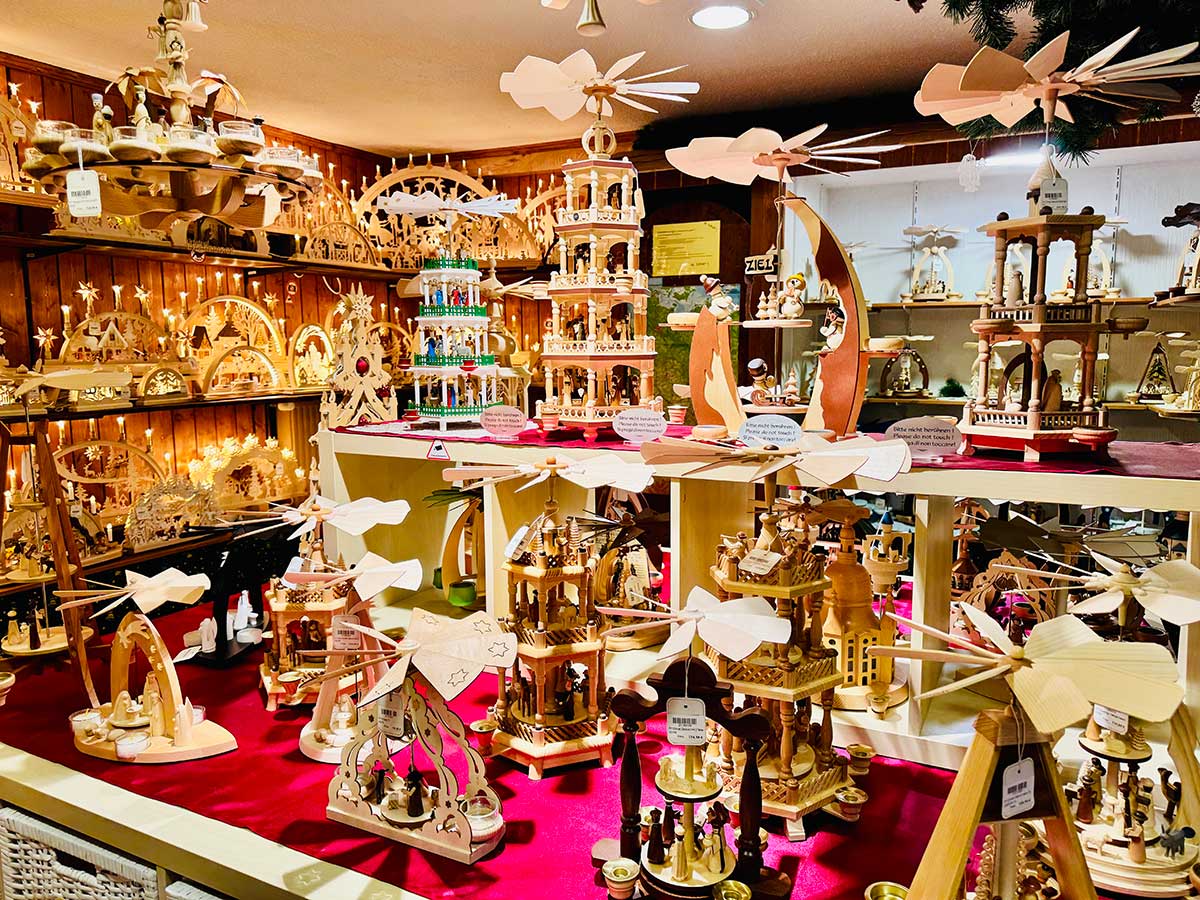
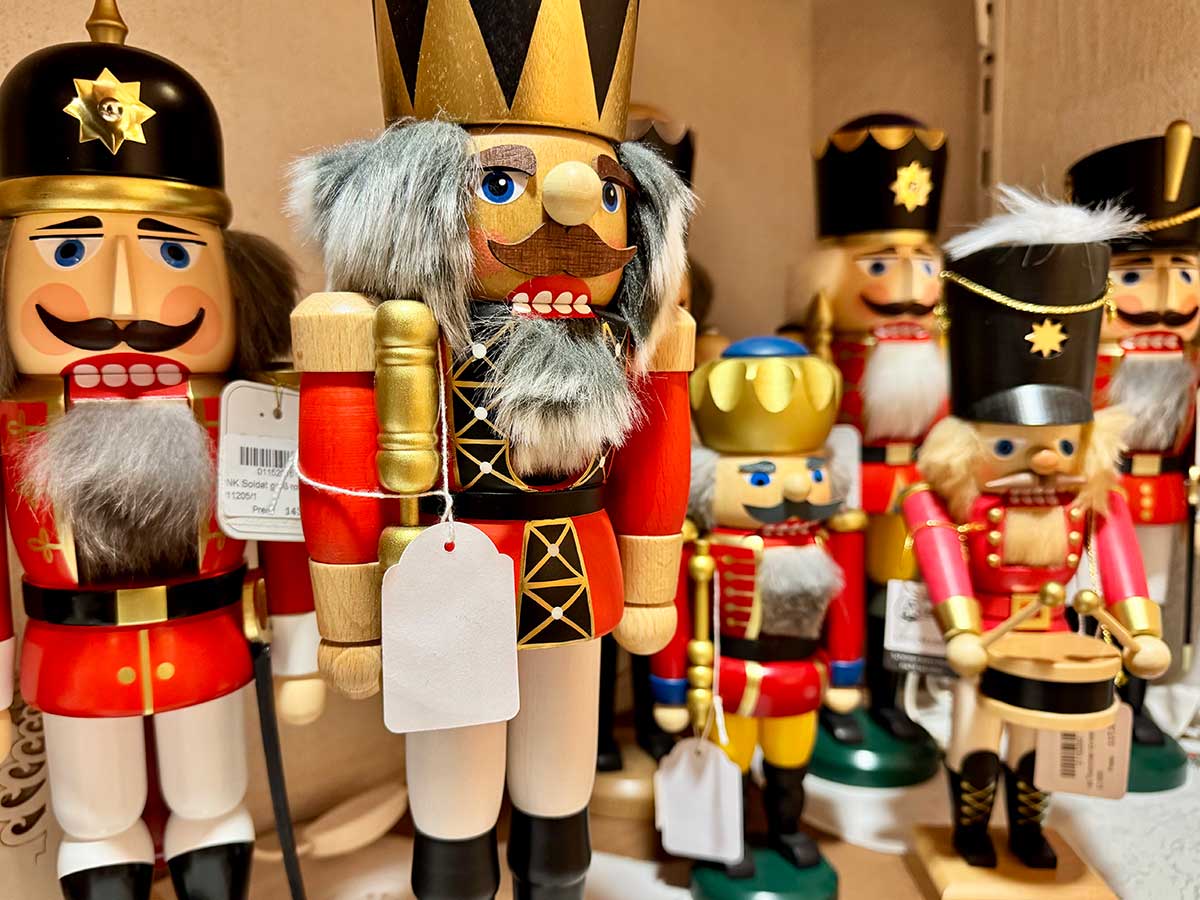
Of course, there are large, globally active companies such as Wendt & Kühn with their figurines, or larger businesses that use CNC machines or lasers, e.g., to prepare parts, but the assembly and painting is still done by hand. But if you travel around the Seiffen and Olbernhau area, you’ll find lots of small manufacturers who produce their own carvings – and many of them have been doing so for generations. We have a lot of their products here in our shop, and of course they are purely handmade and not “Made in China.” But customers really appreciate quality and the effort that goes into a product—if we take a nutcracker as an example, it takes about 160 steps to complete.
What we now call Erzgebirge folk art—how far back does it go?
At least as far back as the 17th century. Woodworking existed before that, of course, but these typical carvings depicting miners, Christmas angels, nutcrackers, etc. date back to a time when miners had to find other ways to earn money when everything was frozen solid in winter and they couldn’t work underground.
Does that have anything to do with the “Schwibbogen”, the candle arches?
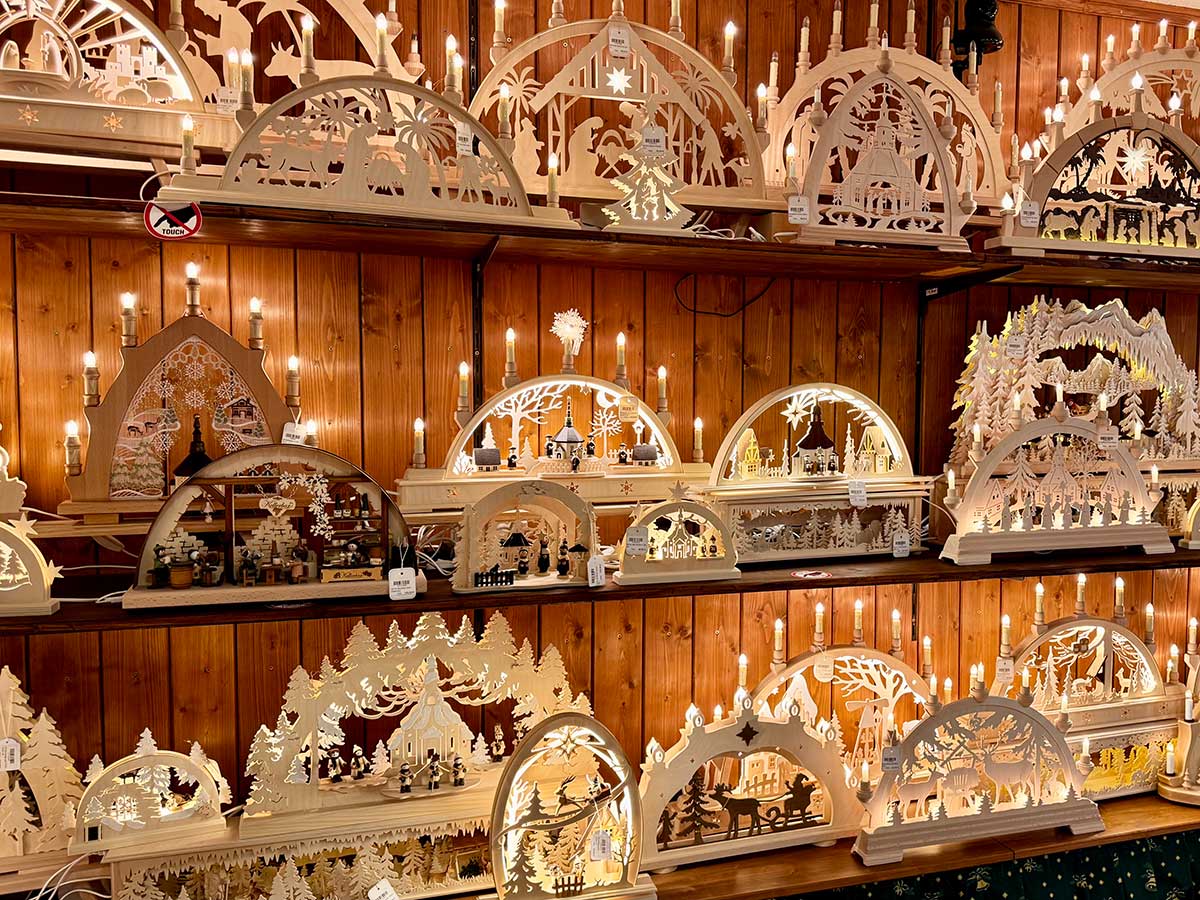
Yes, it symbolizes the entrance to the tunnel and has seven lights. They represent the seven days of the week. On Monday, one miner’s lamp hung from the arch above the tunnel entrance, on Tuesday there were two, and so on. This accompanied the miners of the Erzgebirge every day. And at some point, someone came up with the idea of carving something like this “in miniature” out of wood so that people could put it in their windows. In fact, this was also for practical reasons, because there was no proper street lighting in those days, so candles in the windows really made sense to help people get home safely in the dark.
Where do your customers come from and where do you deliver?
First of all, there are a lot of Saxons in Berlin. Many of them no longer visit their former hometown regularly and simply need to stock up. Then there are many Berliners who have caught the bug—especially when it comes to traditional Christmas items. And then, of course, there are people from all over the world. Some buy a nutcracker purely as a souvenir, as “typical German craftsmanship.” But there are also many Americans with German ancestors whose grandmother had a pyramid, for example, and who like to continue these traditions. But yes, we do deliver worldwide, and for example, just last week we shipped a package to Australia.
Are there any year-round bestsellers, and are there collectors?
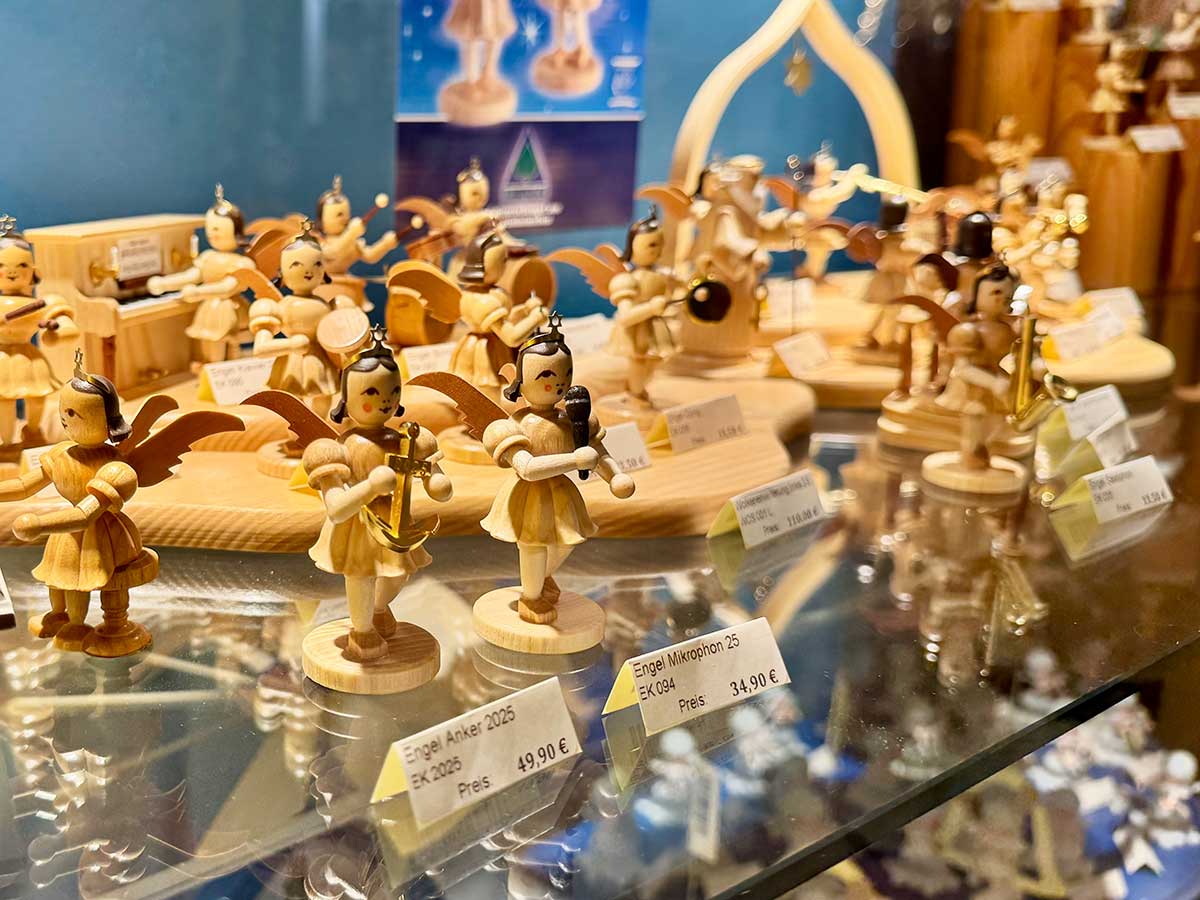
People love nutcrackers, and they are bought all year round. They come in sizes ranging from approximately 7 to 70 cm and in countless variations. Some people also buy a nutcracker because their little daughter is now dancing ballet and is therefore crazy about nutcrackers. Or the Wendt & Kühn angels, for which there is also a huge collectors’ market, partly because new figures are released every year. The idea behind the “Colorful Eleven-Point Angel” is also great. It is a limited edition, and for every figure sold, four euros go to Queen Silvia of Sweden’s World Childhood Foundation for the protection of children’s rights. It is a beautiful, unique gift, and at the same time, you are helping a good cause.
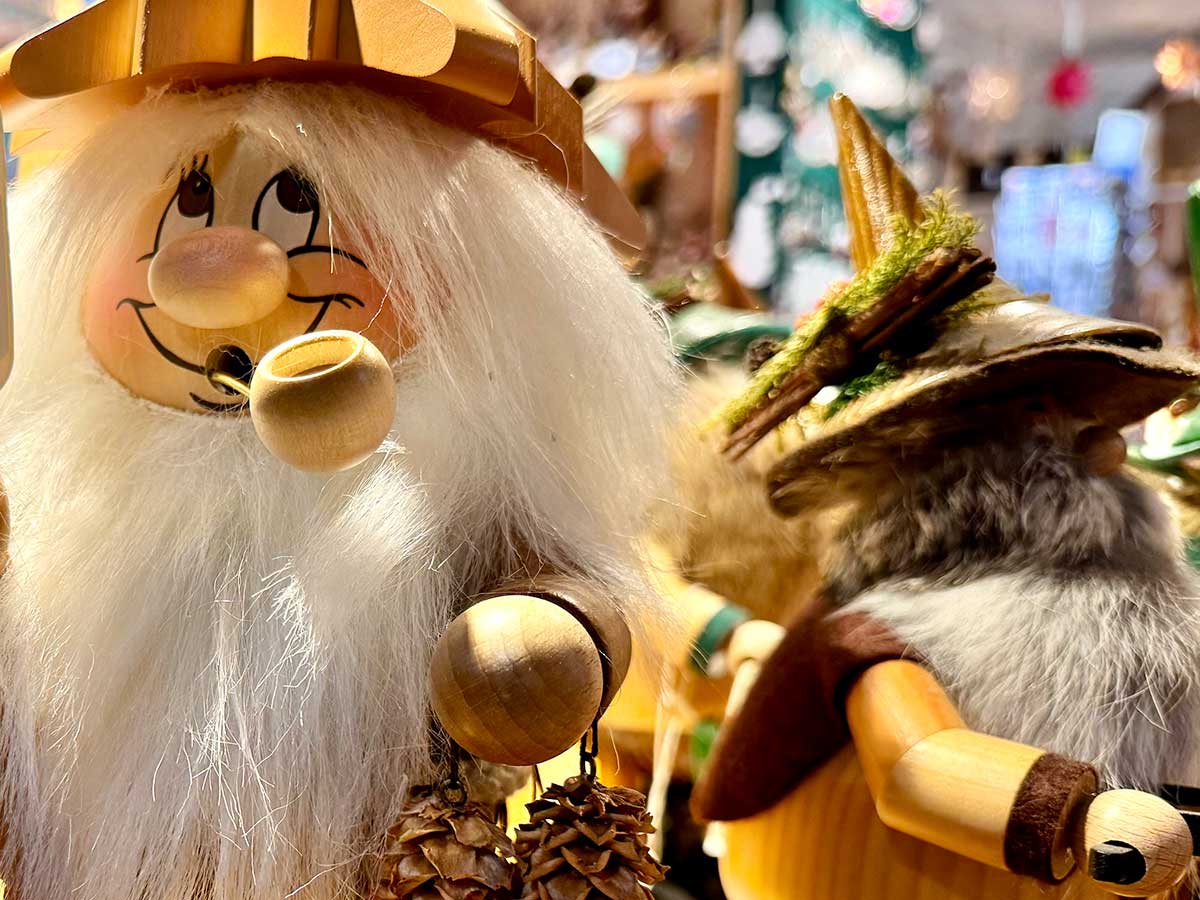

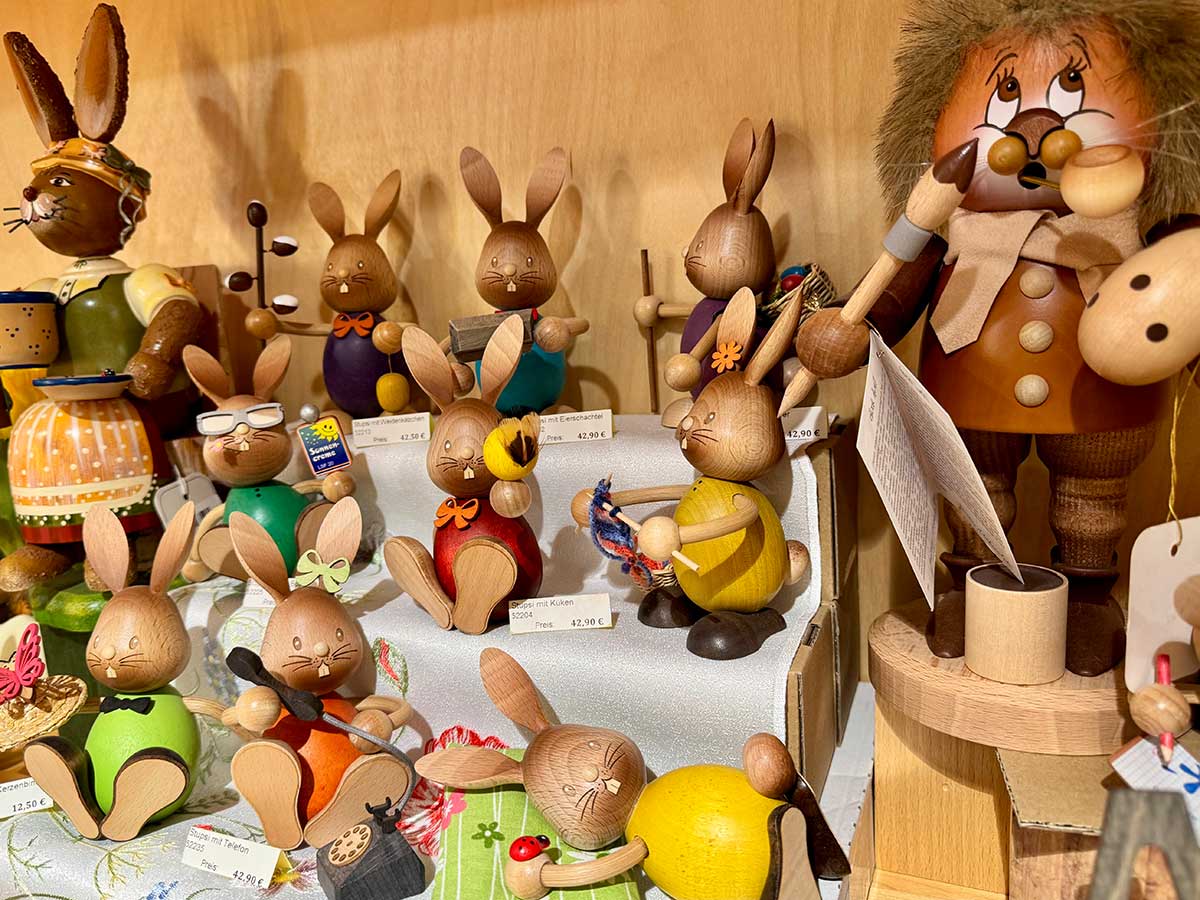
Erzgebirgischer Weihnachtsmarkt im Nikolaiviertel
Propststraße 8 • 10178 Berlin
Website: das-sachsenhaus.de • E-Mail: info@das-sachsenhaus.de • Phone: (030) 2411229