


Cast in bronze, three iconic Berlin characters say “Welcome to the Nikolaiviertel”
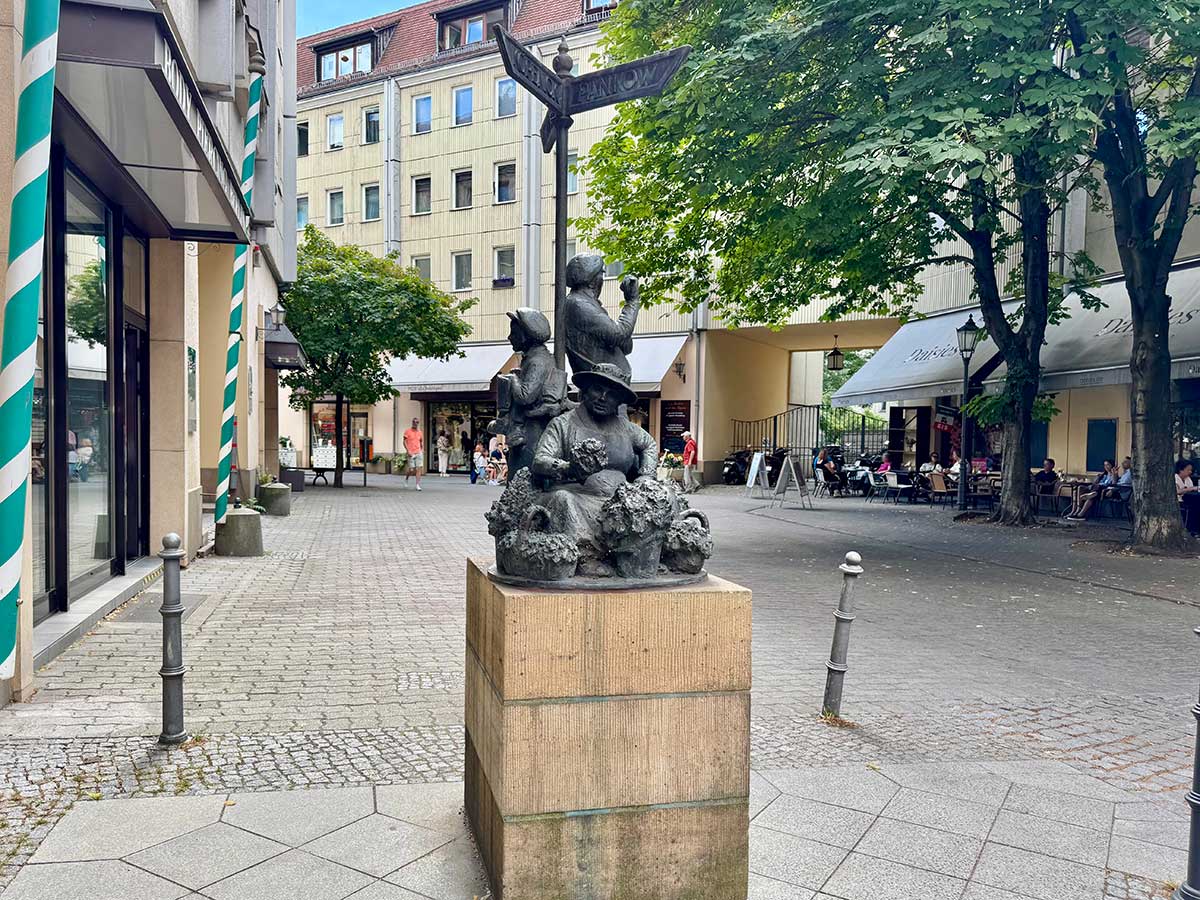
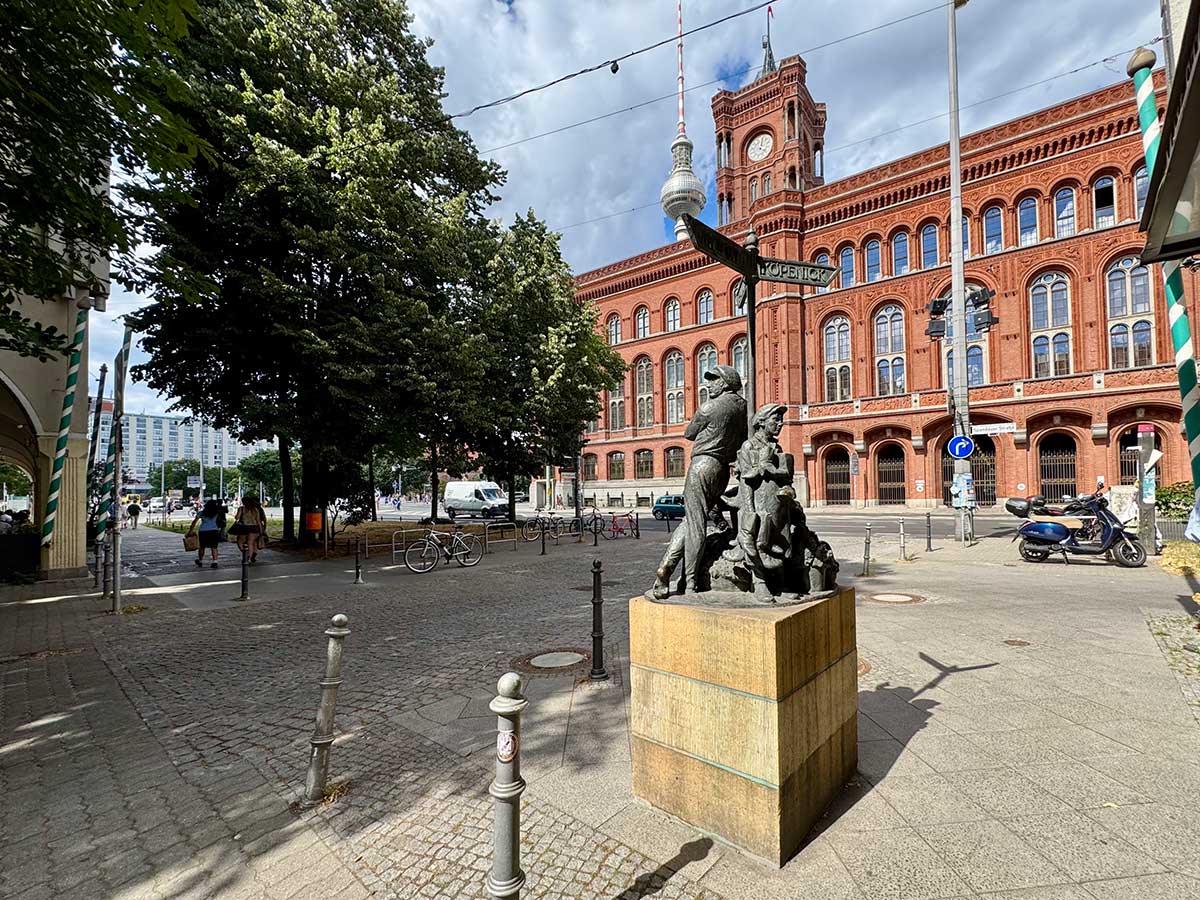
Anyone entering the Nikolaiviertel across the street from the Rotes Rathaus through the northeast entrance at the corner of Spandauer Straße and Am Nußbaum will encounter three very special figures after just a few steps—and they “tell” plenty of stories about old Berlin. The bronze sculpture “Altberliner Originale” by sculptor Gerhard Thieme depicts three figures who represent 19th-century Berlin life: Nante, the street corner loiterer; the old Berlin flower seller; and the Berlin shoemaker’s apprentice. Since its installation in 1987, the sculpture group has been one of the neighborhood’s most popular photo spots—and if you pause for a moment, you’ll discover far more than just three bronze figures.
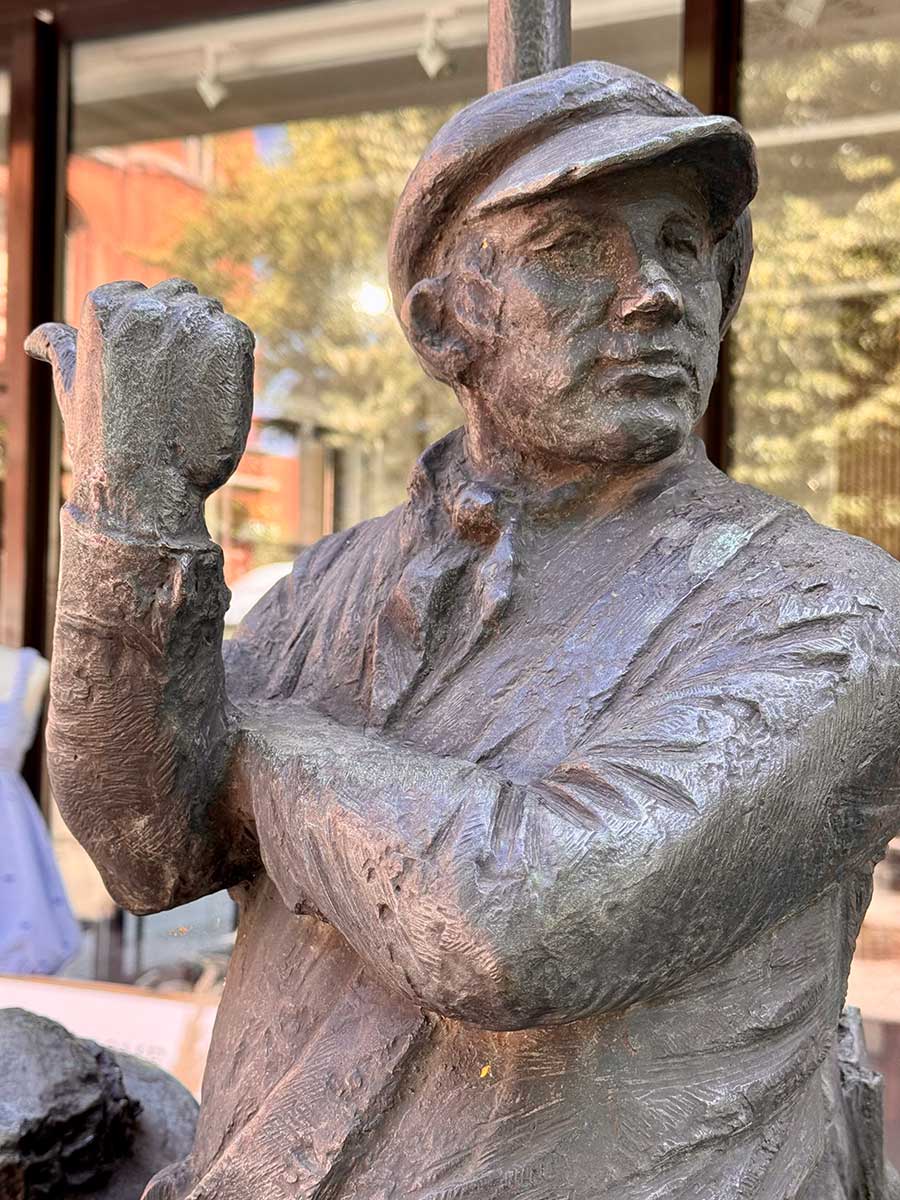
The focus is on famous “Eckensteher” Nante. The term “Eckensteher” describes someone who waits for work on a street corner or watches the goings-on. Nante, however, was far more than just a simple service man. With his dry humor, quick wit, and ability to comment on any situation with a fitting remark, he became a true Berlin cultural icon in the 19th century. Plays and stories made him famous far beyond the city limits. Gerhard Thieme depicts him leaning casually against a signpost—as if he just had time for a chat with passersby.
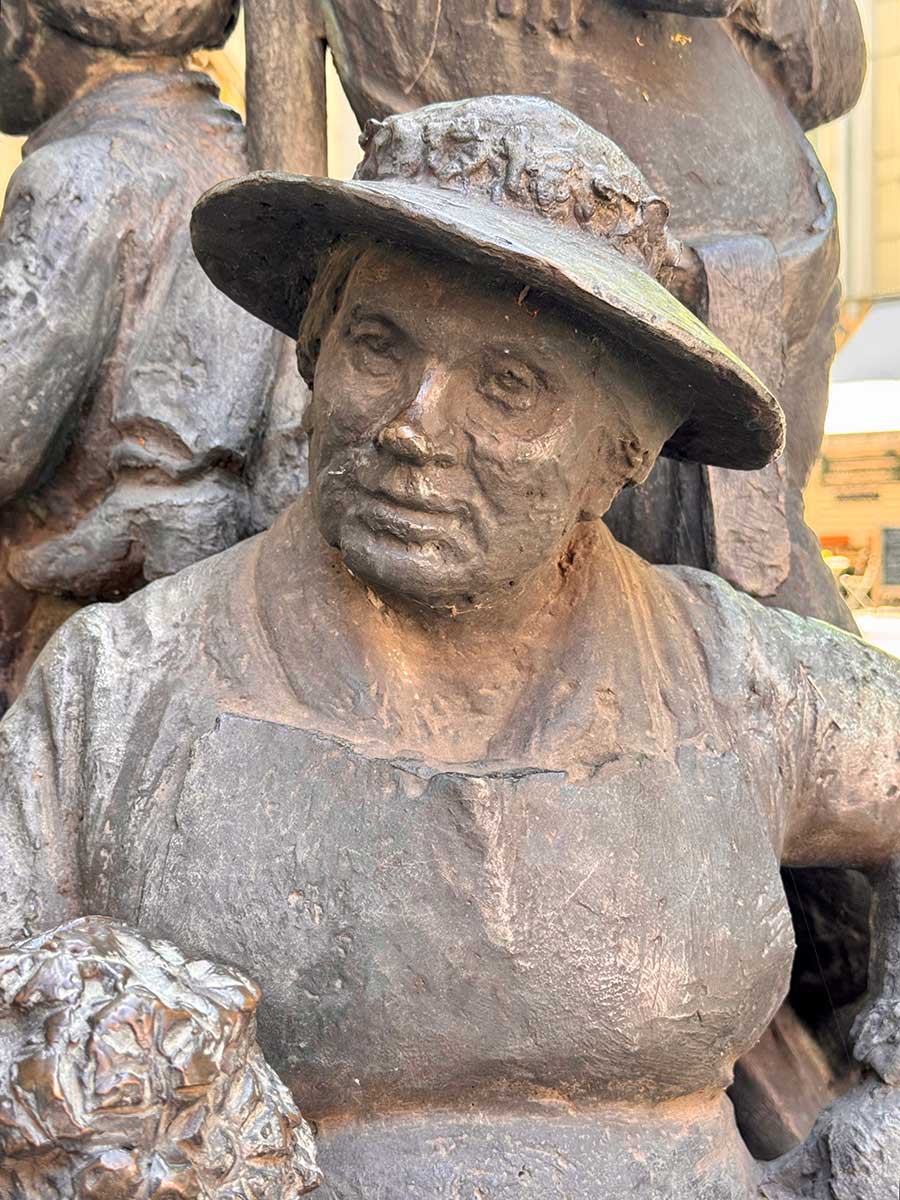
Equally endearing is the character of the traditional Berlin flower seller, whose baskets of flowers make the scent of the old street markets almost tangible. In the past, female flower sellers were a familiar sight in Berlin. They sold their bouquets in squares and on street corners, knew their regular customers, and were often as skilled at conversation as they were at business. In the sculpture, she embodies the warm, hardworking side of the city and serves as a reminder that life in Berlin has always been shaped by the people who worked outdoors every day.
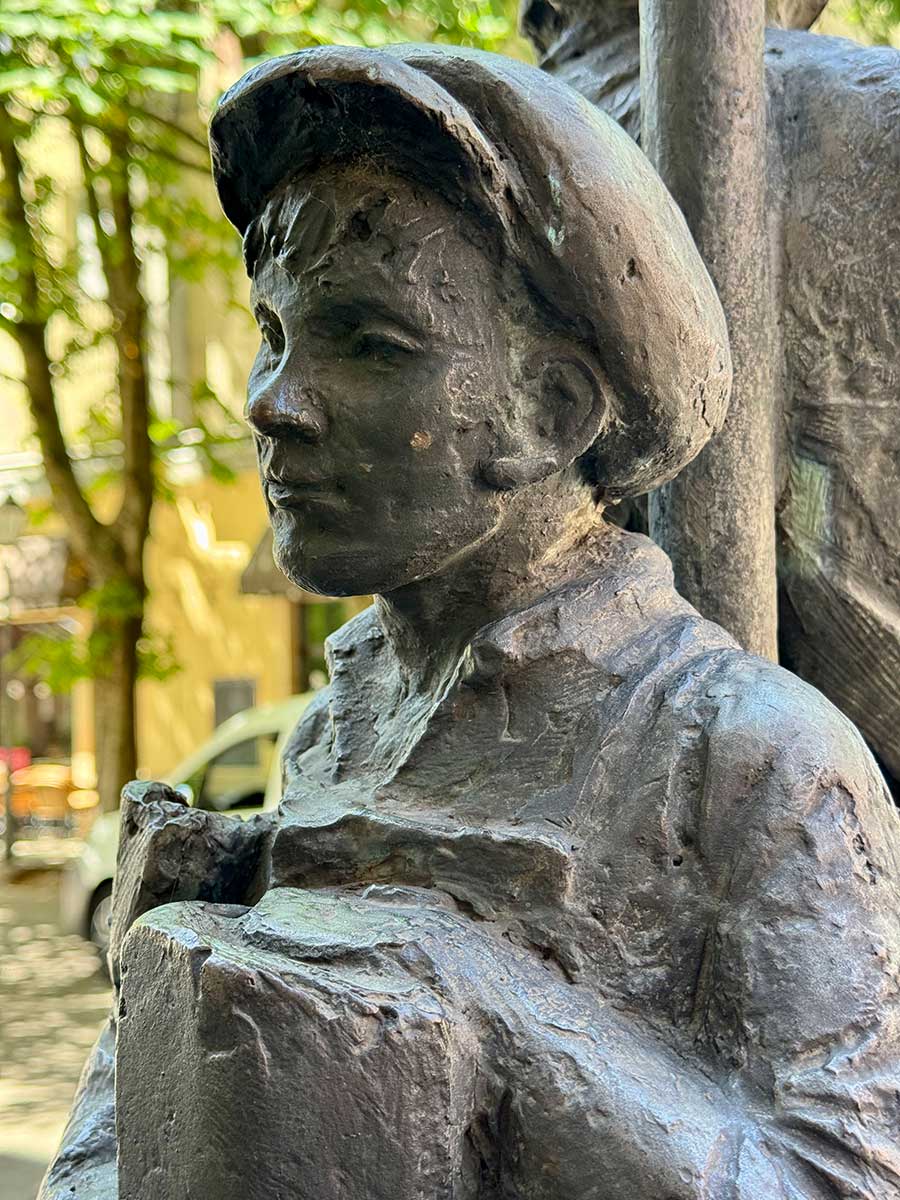
The third figure, the Berlin shoemaker’s apprentice, represents the youngest members of the working class. Back then, many children helped out in craft workshops or ran errands. Even though their tasks may seem unusual from today’s perspective, they were part of everyday life in the rapidly growing city. The vividly depicted boy brings movement to the group of figures and gives it a cheerful, almost playful aura.
Together, the three figures tell the story of old Berlin—a city full of colorful characters, where humor, hard work, and a healthy dose of self-confidence were part of everyday life. It is precisely this mix that gives the sculpture its special charm. Visitors can easily imagine Nante making a cheeky remark, the flower seller touting her wares, and the young cobbler hurriedly finishing his next job. In this way, the city’s history comes to life in an entertaining way.
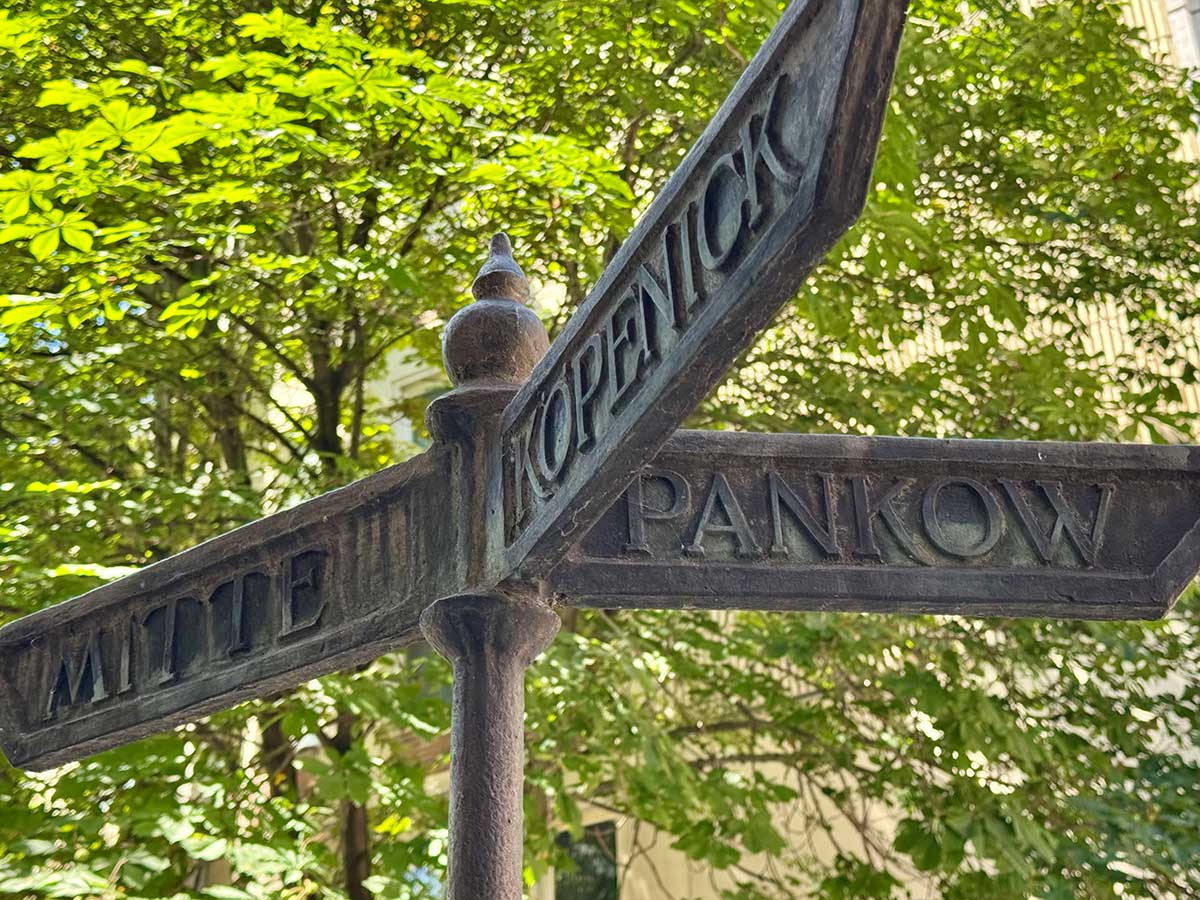
By the way: the signpost pointing toward Mitte, Pankow, and Köpenick is more than just a decorative detail. Although no official explanation of its significance has been handed down, it seems likely that it symbolically connects the various historic parts of Berlin. Thus, the street corner figure Nante almost seems like a city guide who welcomes visitors at the entrance to the Nikolaiviertel and, with a twinkle in his eye, shows them the way through the capital.
The sculpture group was created by Gerhard Thieme (1928–2018), one of the leading sculptors of the former GDR. After completing his apprenticeship, he studied sculpture in Dresden and Berlin and was a master student of the renowned artist Fritz Cremer. Early in his career, Thieme specialized in sculptures for public spaces. His particular talent lay not only in depicting people realistically, but also in bringing their character to life. His figures never appear stiff or aloof—they seem to be taken straight from real life.
His other works include the striking bronze sculpture “Construction Worker,” the whimsical fountain “Climbing Children” in Pankow, the sculpture “Archimedes,” “Steelworker,” as well as various memorial complexes and portrait sculptures. Many of his works combine technical precision with a strong connection to people’s everyday lives—a characteristic that also defines the “Old Berlin Originals”. And in the Nikolaiviertel itself, there are two more works by Gerhard Thieme: the bronze city seal in front of St. Nicholas Church and the sandstone reliefs on the Founding Fountain, just a few steps away.